22nd June 2026
You might have noticed a City Square House bee throughout the city, The bees are foraging up to 3 miles in all directions on flowers, plants and trees, brining nectar and pollen back to the hives.
The honey bee is one of our most important pollinators, bees pollinate 1 third of all the food we eat!
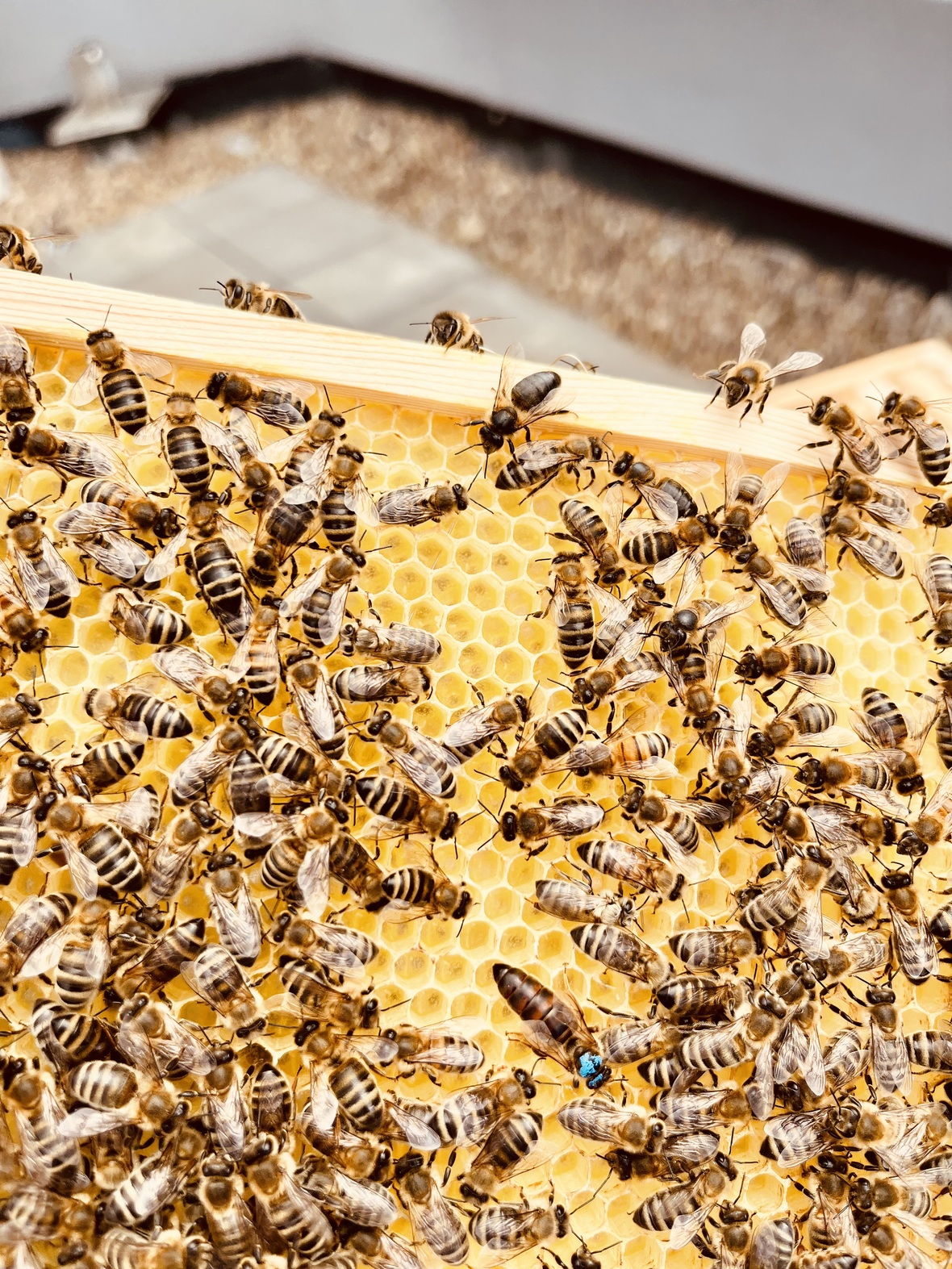
The queen bee is the largest bee in the colony, measuring around twice the size of a worker bee. During peak season, she can lay up to 2,000 eggs each day, ensuring the colony continues to grow and thrive.
“If the bee disappeared off the surface of the globe, then man would have only four years of life left. No more bees, no more pollination, no more plants, no more animals, no more man.” ― Albert Einstein
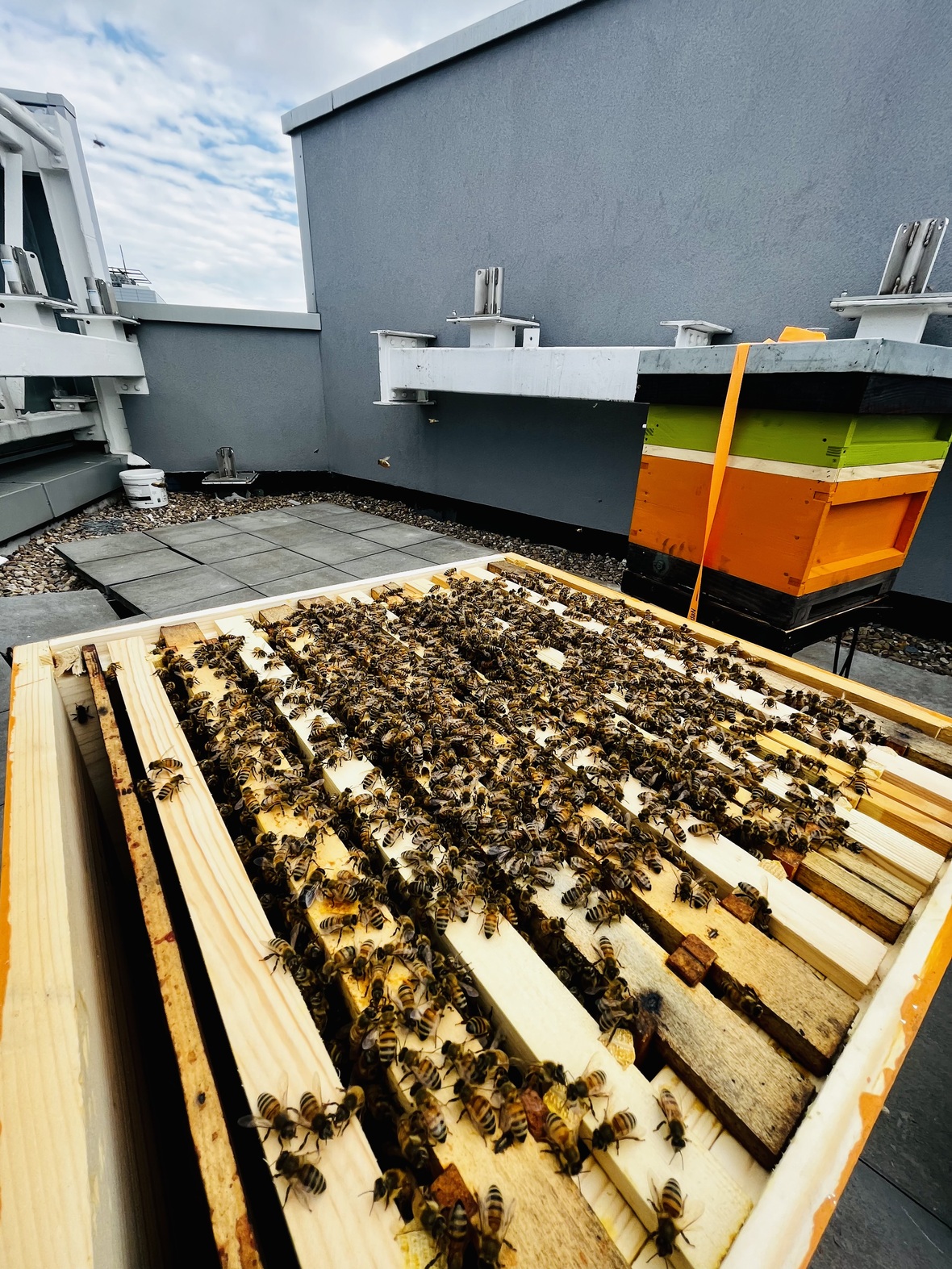
Bees are in trouble and under threat from the overuse of pesticides, climate change, loss of habitat and biologically from a parasitic mite called the varroa mite which has spread across the globe decimating honey bee populations.
By hosting honey bee colonies at City Square House in partnership with Band of Bees you are supporting bee populations while managing the health of the colony.
This in-turn increases pollination of plants, which leads to better yields for gardens, allotments, farms and more beautiful and abundant green spaces.
June is one of the busiest and most productive months in the beekeeping calendar. Honey bee colonies are approaching their peak population, with tens of thousands of worker bees leaving the hive each day to collect nectar and pollen. During this time, bees play a vital role in pollinating wildflowers, gardens, crops and native trees, helping to support biodiversity and healthy ecosystems across the landscape.
In June, bees forage on a rich variety of flowering plants including clover, bramble (blackberry), lime trees, foxgloves, lavender, roses, field beans, poppies, thistles and a wide range of summer wildflowers.
Inside the hive, the queen is laying up to 2,000 eggs per day, ensuring the colony remains strong during the height of the season. Worker bees are busy caring for the developing brood, building fresh honeycomb, storing nectar and pollen, producing honey and ventilating the hive to maintain the ideal temperature.
June is also the peak swarming season, so regular beekeeper inspections are essential to ensure colonies remain healthy, productive and well managed. It is one of the most rewarding months of the year, with thriving colonies making a significant contribution to pollination and the health of the surrounding environment.
14th July 2026
1st June 2026
14th May 2026
15th April 2026
1st April 2026